
How Diet, Sleep & Stress Affect Blood Biomarkers?
Most people treat blood tests like a verdict. You get your report. You look at the numbers. You feel relieved — or worried. But here’s what’s rarely explained:
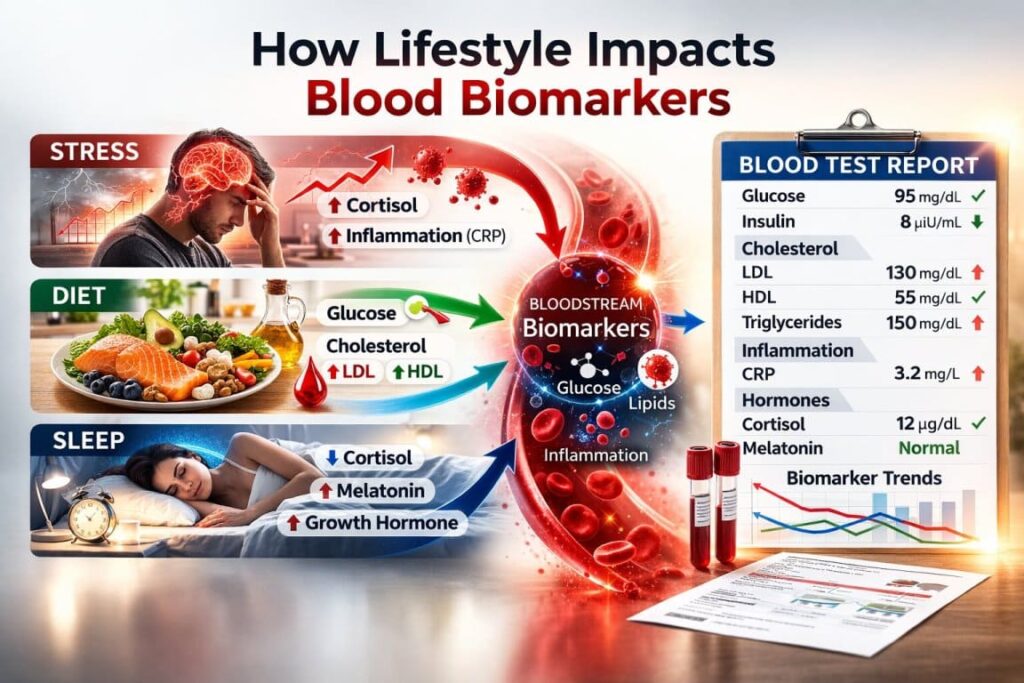
Your blood biomarkers are not fixed. They are constantly being rewritten. What you ate yesterday. How well you slept last week.The stress you’ve been carrying for months. All of it leaves a measurable chemical signature in your bloodstream.
This article explores — in depth — how diet, sleep, and stress act as biological programmers, shaping glucose control, inflammation, hormones, lipids, and long-term disease risk.
What Are Blood Biomarkers, Really?
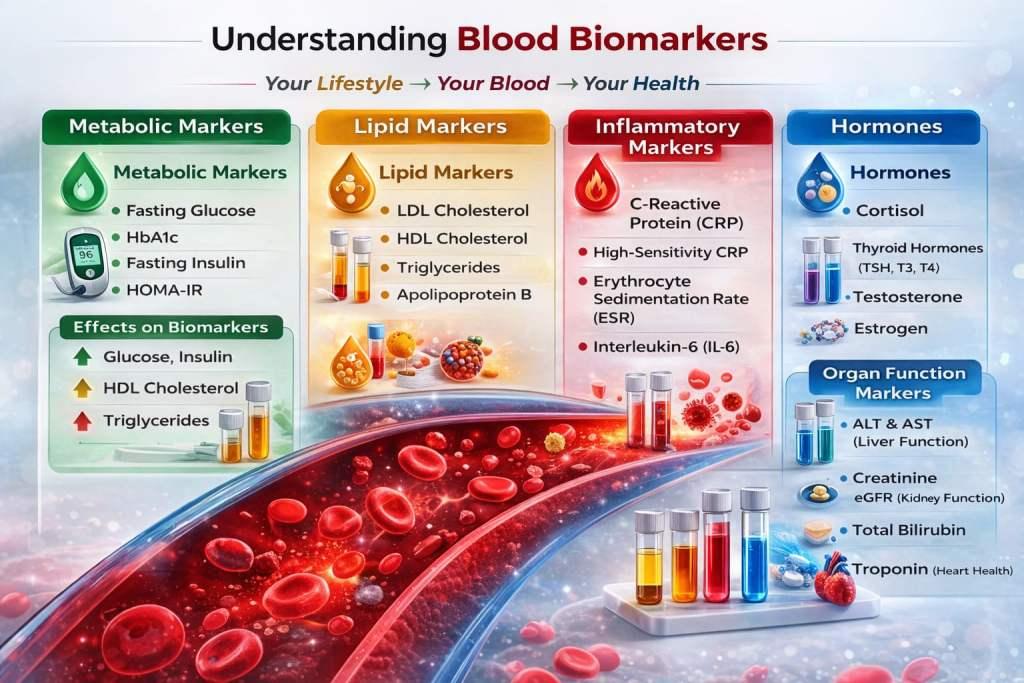
Blood biomarkers are measurable substances that reflect biological processes inside your body. They give insight into:
- Metabolic health (glucose, insulin, HbA1c)
- Lipid metabolism (LDL, HDL, triglycerides, ApoB)
- Inflammation (CRP, hs-CRP, IL-6, TNF-α)
- Hormonal balance (cortisol, thyroid hormones, testosterone)
- Immune function (white blood cells, neutrophil-to-lymphocyte ratio)
- Organ performance (ALT, AST, creatinine, eGFR)
Think of them as real-time data from your internal environment.
They often change long before symptoms appear.
1. Diet: The Metabolic Blueprint
Diet doesn’t just influence weight.
It reshapes metabolic chemistry at a cellular level.
Glucose, Insulin & Metabolic Flexibility
Key biomarkers:
- Fasting glucose
- HbA1c
- Fasting insulin
- HOMA-IR
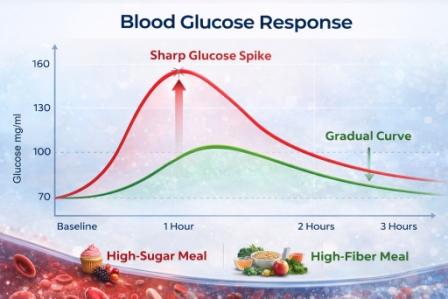
A high intake of refined carbohydrates and sugars triggers repeated glucose spikes. Over time:
- Insulin levels rise
- Cells become less responsive
- HbA1c increases (reflecting 3-month average glucose)
- Triglycerides rise through de novo lipogenesis (conversion of excess carbs into fat)
HbA1c is especially important. It measures “glycation” — when sugar binds to proteins, including hemoglobin. Think of it as biological “caramelization.”
On the other hand, diets rich in:
- Fiber
- Whole foods
- Legumes
- Vegetables
- Healthy fats
improve insulin sensitivity and stabilize glucose variability.
The triglyceride-to-HDL ratio is particularly revealing. A ratio above ~2.0 often signals insulin resistance more clearly than LDL alone.
Lipid Profile: It’s Not Just LDL
Traditional focus stays on LDL cholesterol. But deeper analysis includes:
- Triglycerides
- HDL cholesterol
- ApoB (Apolipoprotein B)
ApoB measures the total number of atherogenic particles — a more precise cardiovascular risk marker than LDL concentration alone.
Refined sugars and trans fats can:
- Raise triglycerides
- Increase small dense LDL particles
- Lower HDL
Omega-3 fatty acids and Mediterranean-style eating patterns tend to:
- Reduce triglycerides
- Improve HDL function
- Lower inflammatory markers like CRP
Diet quality matters more than single nutrients.
Lipid Profile: It’s Not Just LDL
Traditional focus stays on LDL cholesterol. But deeper analysis includes:
- Triglycerides
- HDL cholesterol
- ApoB (Apolipoprotein B)
ApoB measures the total number of Atherogenic Particles — a more precise cardiovascular risk marker than LDL concentration alone.
Refined sugars and trans fats can:
- Raise triglycerides
- Increase small dense LDL particles
- Lower HDL
Omega-3 fatty acids and Mediterranean-style eating patterns tend to:
- Reduce triglycerides
- Improve HDL function
- Lower inflammatory markers like CRP
Diet quality matters more than single nutrients.